A slab leak in Cary is a pressurized supply pipe failing beneath a concrete floor, which is only possible where part of the house, a garage conversion or an addition was poured on grade. A plumber confirms it with a pressure test, pins down the spot, then either opens the concrete for a repair or abandons that run and installs new pipe through the walls or attic. Call the number on this page to be connected with a local plumber in Cary.
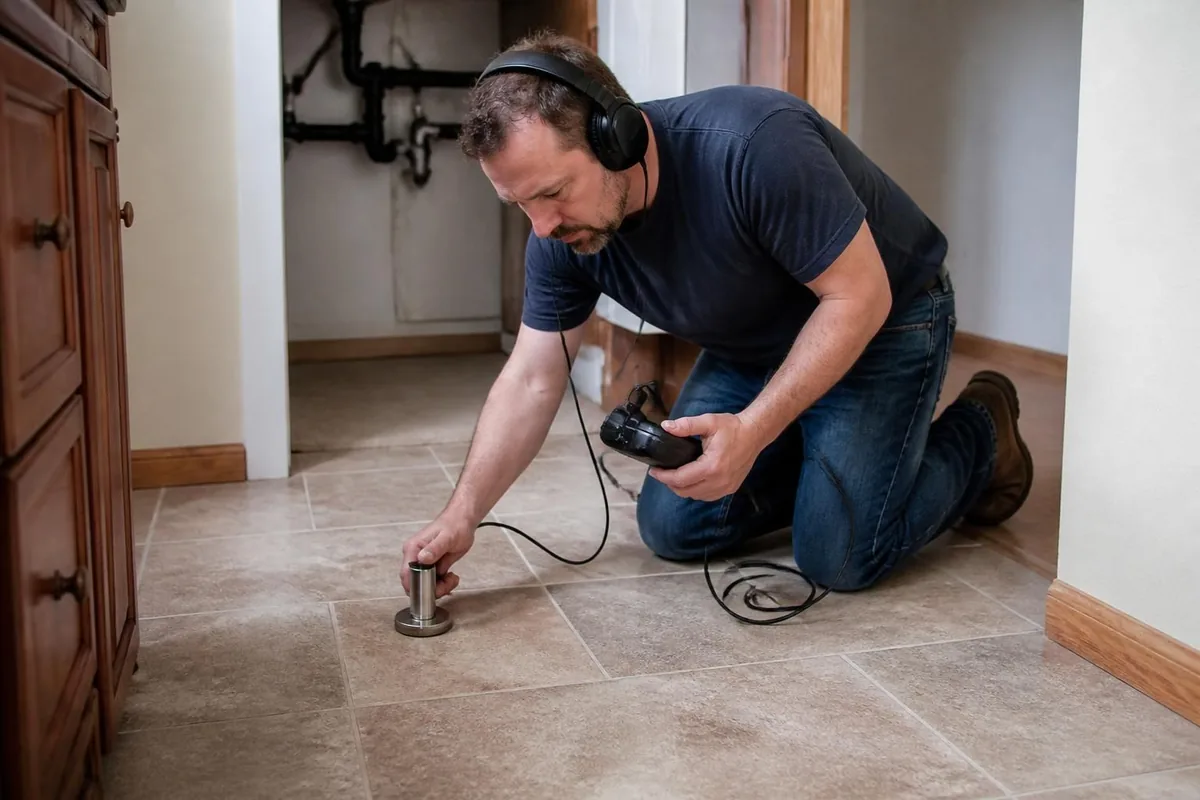
Clues that the leak is under the floor
- The Town of Cary meter keeps registering use with every tap, toilet and appliance shut off
- A patch of tile or finished concrete feels noticeably warmer than the floor around it
- Carpet pad or the bottom edge of drywall stays damp with no plumbing fixture nearby
- You hear water moving inside a wall or under the floor late at night
- The water heater cycles more often than your household's routine would explain
Any one of these can have another cause, such as a toilet flapper that leaks. Two together justify a test.
What matters about Cary houses
Cary's housing is mostly from the 1980s through the 2010s. The median home was built in 1999, and only about 12% date to before 1980, according to Census survey data. That's younger than many Triangle towns, but a house built in the 1980s or 1990s has had decades for buried copper to rub against concrete, gravel or rebar where it passes through the slab. Foundation type varies street by street here, so it's worth knowing whether yours is a slab, a crawl space or a mix, such as a raised house with a slab garage.
The ownership line is clear. The Town of Cary generally owns the pipe from its main to the water meter, and the property owner owns the line from the meter to the house plus all the plumbing inside. A leak under your floor or in the yard past the meter is yours to fix. Cary's water is treated with chloramines most of the year (a 2.96 ppm running average in the 2025 report) with a spring switch to chlorine, and the town reports no lead service lines in its system.
What moves the price up or down
- Locating time. Isolating hot from cold, acoustic listening and thermal imaging. A tight location means a smaller hole.
- Repair method. A spot repair through the slab versus rerouting a new line overhead, which skips the concrete but runs through finished walls.
- Floor covering. Porcelain tile, hardwood and polished concrete cost more to open and patch than vinyl or carpet.
- Hidden damage. Wet subfloor, pad or drywall may need drying before anything is closed up.
What happens when you call
You'll be put through to an independent plumber who serves Cary. Mention whether the warm spot or sound seems tied to hot or cold water, what the meter did with everything off, and what flooring covers the area. If the job involves opening the slab or running new piping, the plumber can tell you whether a permit is needed from Town of Cary Inspections and Permits, which reviews and issues plumbing permits.
Slab Leak Repair questions in Cary
Who pays to fix a leak between the water meter and my house?
What makes one spot on a tile or concrete floor feel warm?
Our house is fairly new. Why would it already have a slab leak?
Does fixing a slab leak always mean breaking up the floor?
More plumbing services in Cary
Slab Leak Repair nearby
Sources
Last updated: