Leak detection is the work of locating hidden water loss, in a wall, under a slab or in the yard, before anything is torn out. You can confirm there's a leak with the water meter and a quick toilet check; finding exactly where it is calls for a plumber's equipment. Call the number on this page to be connected with a local plumber in Raleigh.
Confirm it before you pay to find it
Watch the meter. Shut off every faucet, appliance and irrigation zone. Read the meter, wait an hour or two without using water, and read it again. Many meters also have a small low-flow indicator that turns when even a trickle is passing. Movement with everything off means water is going somewhere.
Split inside from outside. Close the home's main shutoff and check the meter again. If it still moves, the leak is likely on the service line between the meter and the house, or the shutoff isn't sealing.
Check the toilets. Add a few drops of food coloring to each tank and wait without flushing. Color showing up in the bowl means a flapper or fill valve is letting water through, a simple fix that should come before any detection work.
Clues that point to a location
| What you notice | Where to suspect |
|---|---|
| Warm patch on a tile or concrete floor | Hot water line under the slab |
| Stain or soft drywall on a ceiling | Supply or drain line in the floor above |
| Wet ground or lush grass in a dry spell | Water service line in the yard |
| Hissing in a wall when nothing is running | Pressurized supply pipe in that wall |
Tools a plumber brings
- Acoustic listening amplifies the sound of escaping water through floors, walls and soil.
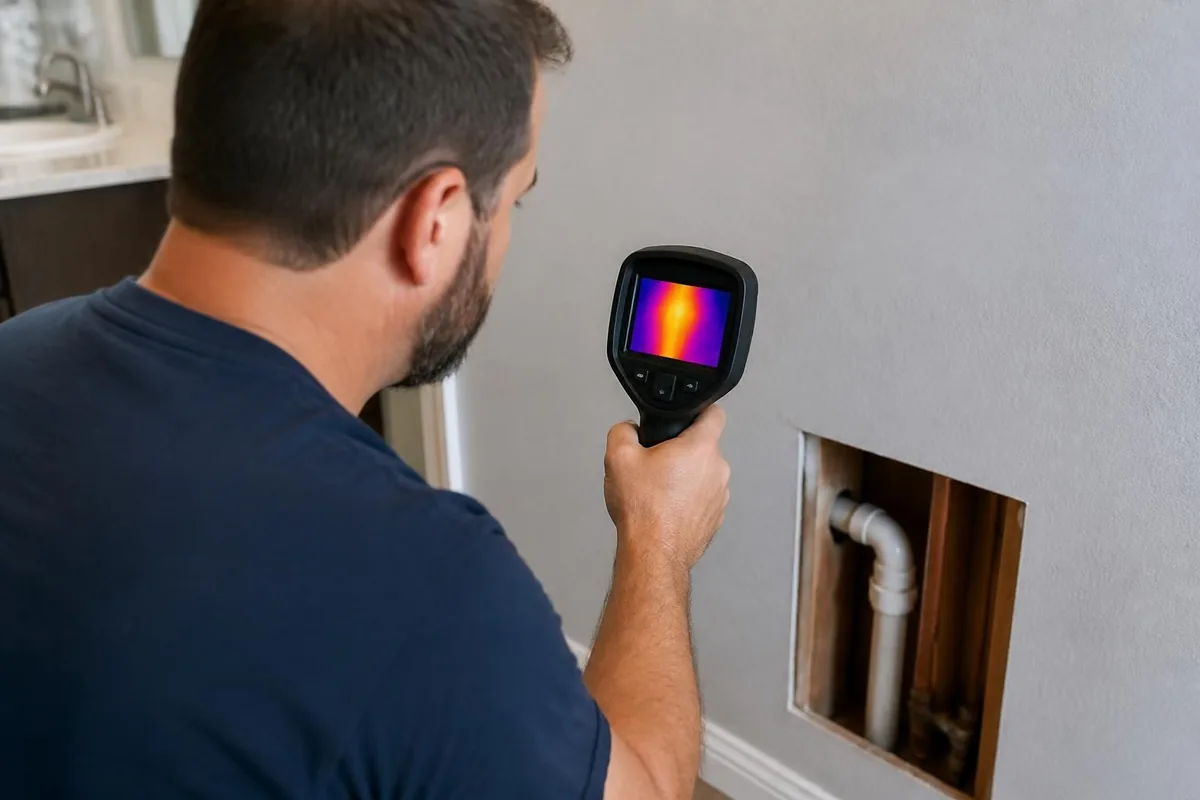
- Thermal cameras show the heat signature of a leaking hot line.
- Pressure tests isolate sections of piping to show which one is losing water.
- Moisture meters map how far water has spread into framing or subfloor.
- Line tracers follow buried pipe so the yard is only opened where it needs to be.
The City's part and yours
The City of Raleigh maintains water lines up to the property line. From there to the house, the service line is the owner's responsibility. A leak in the street or before the property line is the City's to repair, so report it to Raleigh Water at 919-996-3245. A leak on the private run, or anywhere inside, is yours to have found and fixed.
Older homes and slabs
Raleigh's housing is mostly from the 1980s onward, with a median build year of 1997, but about 23% of homes date to before 1980. Older supply piping is more prone to pinholes and tired fittings, and slab-on-grade homes of any age can hide a leak under the floor for months.
What affects the cost
How many methods it takes, whether the leak is under concrete, behind finished walls or underground, and how easy the house is to access all matter. Detection and repair are usually priced separately, so ask which one a quote covers.
Leak Detection questions from Raleigh homeowners
How can I tell if my Raleigh home has a leak?
Who fixes a leak in my yard, me or the City of Raleigh?
Will finding the leak mean opening up walls?
Could a running toilet be the cause of a high bill?
Related plumbing services in Raleigh
Leak Detection in nearby cities and towns
Wake County
Johnston County
Harnett County
Lee County
Nash County
Wilson County
Wayne County
Sources
Last updated: