Clayton's water is on the soft side: the town's 2024 report lists average hardness of 32.5 ppm, so a softener rarely pays off inside town limits. Homeowners here usually want a filter for disinfectant taste, and well owners outside town are the ones most likely to need softening. Call the number on this page to be connected with a local plumber in Clayton.
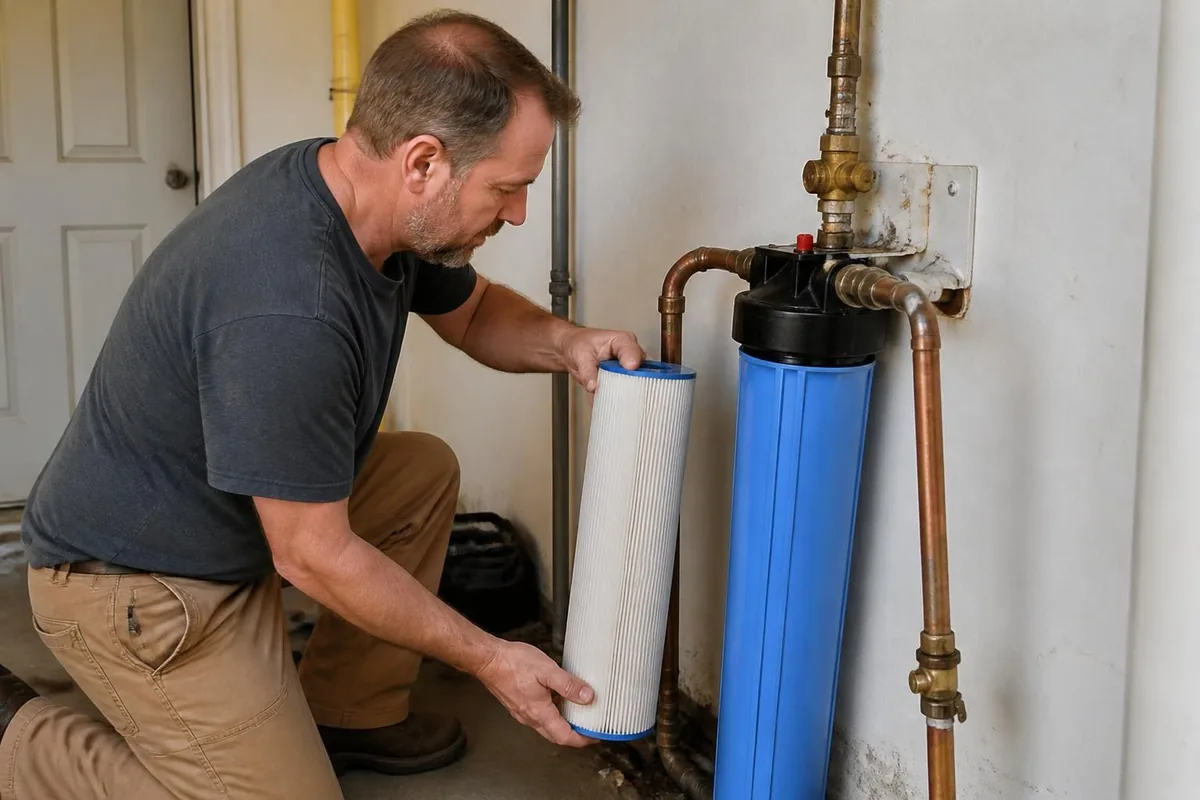
What people in Clayton usually notice
- Tap water that smells of chlorine one month and less the next
- A faint taste in ice or coffee
- Orange or black staining in sinks on a private well outside town
- Scale in a water heater or on fixtures in a rural home
- Questions about sodium for someone on a restricted diet
Clayton's water, by the numbers
The Town of Clayton doesn't treat its own water. It buys Neuse River water from Johnston County Public Utilities and distributes it through two systems: one for the Riverwood area and one for the rest of town, each with its own annual report. The 2024 report for the main system shows hardness averaging 32.5 ppm, with a range of 27 to 38. Water in that range is soft, so there's little calcium or magnesium for a softener to pull out.
The same report lists both chloramines (about 1.89 ppm on average) and chlorine (about 2.05 ppm). That mix explains why the smell can shift over the year. A carbon filter matched to chloramine handles both. Sodium in the main system averaged about 35 ppm, and the Clayton North report lists about 37 ppm, which is worth knowing before adding a salt-based unit that would raise it further.
Lead sampling in 2023 found no homes above the 15 ppb action level in either system, and the town says it doesn't expect to find lead service lines. Most Clayton homes are recent, too: only about 10% were built before 1980.
Outside town, the picture changes. Unincorporated areas around Clayton are a mix of Johnston County water districts and private wells, which the county permits. Groundwater can carry hardness, iron or other minerals that town water doesn't, so a well test is the starting point there.
What affects the cost
- Type of system: carbon, sediment, softener, reverse osmosis or a combination
- Whole-house capacity versus a single drinking-water tap
- Pipe size and how easy the main line is to reach
- Need for a drain line, outlet or a new bypass
- Replacement media and salt over the years
When you call
We'll connect you with an independent plumber who serves Clayton and the surrounding county. Have your water bill or well paperwork handy so you can say whether you're on town water, a county district or a private well. Expect a few questions about what you've noticed, then a recommendation that should start with testing rather than a sales pitch.
Water Softeners & Filtration questions in Clayton
Where do I find the hardness of my town's water?
Is a softener worth buying if I'm on town water?
How much sodium does a salt-based softener add?
What should a private well be tested for before I buy treatment?
More plumbing services in Clayton
Water Softeners & Filtration nearby
Helpful guides
Sources
Last updated: